

Insurance claims automation platforms have become increasingly important in recent years as insurers respond to rising claim volumes, cost pressures and customer expectations for faster, digital services.
Recent developments in AI and automation now allow platforms to interpret documents using natural language processing, analyse images through computer vision and automatically assess coverage, liability and potential fraud.
Through this approach, claims can be triaged by complexity in real time, enabling straightforward cases to be settled quickly while complex claims are escalated to human adjusters.
For insurers, these innovative platforms improve operational efficiency, reduce manual processing and support more consistent decision-making across large portfolios. Automated workflows also strengthen compliance by creating clear, auditable records throughout the claims lifecycle.
For customers, claims automation platforms reduce administrative burden, shorten settlement times and provide greater visibility through digital updates and self-service tools.
By streamlining the most critical customer interaction in insurance, claims platforms play a central role in improving trust, efficiency and overall service delivery. Here, we consider 10 of the leading innovators in the field.
10. Tractable
Founded: 2014
CEO: Venkat Sathyamurthy
Location: London, United Kingdom
Tractable is an AI company specialising in computer vision for insurance claims and disaster recovery.
Its technology analyses images of vehicle and property damage to produce fast and accurate repair estimates, helping insurers reduce cycle times and costs. Tractable works with global insurers across motor and property lines and is widely regarded as one of the leading AI specialists in the sector.
Despite strong growth and major funding rounds, the company has remained relatively lean, focusing on high-impact engineering and data science talent rather than large operational teams.
9. Bdeo
Founded: 2017
CEO: Julio Pernía Aznar
Location: Barcelona, Spain

Bdeo is a computer vision and AI company focused on digital insurance claims and risk assessment. Its platform enables policyholders to submit images and videos via mobile devices, allowing insurers to automate the first notice of loss and damage evaluation.
Bdeo primarily serves European and Latin American insurers and has positioned itself as a specialist technology partner rather than a broad core systems provider. As a relatively young and privately held firm, its workforce remains small, reflecting its focus on niche AI capabilities rather than large-scale enterprise deployments.
8. Snapsheet
Founded: 2011
CEO: Brad Weisberg
Location: Chicago, United States

Snapsheet provides cloud-based claims management and virtual appraisal solutions, primarily for motor insurance.
Its technology enables insurers to handle claims digitally from first notice of loss through settlement, reducing reliance on in-person inspections.
Snapsheet is known for its mobile-first approach and strong integration capabilities, allowing insurers to modernise claims without replacing core systems.
While it serves large insurers and partners globally, the company remains mid-sized, with employee growth aligned to product expansion and customer demand rather than rapid workforce scaling.
7. Insurity
Founded: 1985
CEO: Jeff Clarke
Location: Hartford, United States
Insurity is a cloud software provider serving property and casualty insurers and managing general agents.
Its platform supports policy administration, claims, billing and analytics, with a strong emphasis on low-code configuration and data-driven decision-making.
Insurity has grown steadily through acquisitions and platform development, expanding its workforce to support a broad customer base across North America.
Compared with newer insurtech startups, Insurity has a more established operational footprint, reflecting its role as a core systems provider rather than a niche technology specialist.
6. OneShield
Founded: 1998
CEO: Tony Villa
Location: Dallas, United States
OneShield delivers policy, billing and claims software for property and casualty insurers and MGAs, particularly in specialty and commercial lines.
Its modular platform is designed to support complex products and rapid configuration, making it popular with insurers seeking flexibility without full system replacement.
OneShield operates at a mid-enterprise scale, with a workforce larger than most insurtech startups but smaller than global public software vendors.
Its employee base supports both product development and professional services for insurers operating in regulated and specialised markets.
5. Shift Technology
Founded: 2013
CEO: Jérémy Jawish
Location: Paris, France

Shift Technology focuses on AI-driven decision automation for insurance claims and fraud detection. Its models analyse large volumes of claims data to identify risk patterns, helping insurers improve accuracy while reducing manual review.
Shift has expanded internationally, working with major insurers across Europe and North America. As its customer base has grown, so has its workforce, particularly in data science and engineering roles.
While still private, Shift now employs more people than early-stage insurtechs, reflecting its move into large-scale enterprise deployments.
4. Sapiens
Founded: 1982
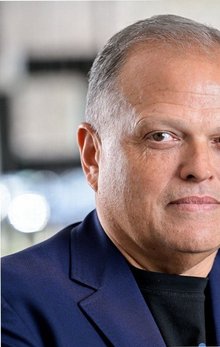
CEO: Mike Ettling
Location: Holon, Israel
Sapiens International is a global provider of insurance software covering property and casualty, life and reinsurance.
Its products support core functions including policy administration, billing and claims, alongside digital engagement tools. Sapiens operates across multiple regions, with staff supporting software development, implementation and ongoing services.
Although publicly listed, it has maintained a more focused workforce than some larger competitors, balancing product breadth with operational efficiency. Its employee count reflects its position as a mature but specialised enterprise software provider.
3. Duck Creek Technologies
Founded: 2000
CEO: Hardeep Gulati
Location: Boston, United States

Duck Creek Technologies provides cloud-native core systems for property and casualty insurers, including policy, billing and claims modules. Known for its SaaS-first approach, Duck Creek supports insurers transitioning away from legacy platforms.
Its workforce has expanded steadily to support product innovation, customer success and global implementations.
While not the largest employer in the sector, Duck Creek’s headcount reflects its role as a leading core systems vendor with a strong focus on scalable cloud delivery rather than heavy on-premise service teams.
2. Mitchell International
Founded: 1946
CEO: Alex Sun
Location: San Francisco, United States
Mitchell International is a long-established provider of claims and collision repair technology, particularly in motor insurance.
Its solutions cover estimating, parts procurement, workflow management and analytics, serving insurers, repairers and OEMs.
As a mature company with deep industry integration, Mitchell employs a large workforce across technology, data and service functions.
Its employee numbers reflect decades of expansion and its central role in automotive claims ecosystems rather than rapid startup-style growth.
1. Guidewire Software
Founded: 2001
CEO: Mike Rosenbaum
Location: San Mateo, United States
Guidewire Software is the largest employer on this list and a dominant provider of core insurance platforms for property and casualty insurers. Its InsurancePlatform underpins policy, billing and claims operations for many of the world’s largest carriers.
Guidewire’s workforce spans software engineering, cloud operations, professional services and customer support across multiple regions.
Its size reflects both its global customer base and its transition from on-premise software to cloud-based SaaS offerings, requiring substantial investment in people and infrastructure.
Company portals








Executives
Brad Weisberg
Founder & CEO
Hardeep Gulati
Chief Executive Officer
Jeremy Jawish
Co-founder & CEO
Julio A. P.
CEO
Mike E.
Operating Partner

Mike Rosenbaum
CEO

Tony Villa
Chief Executive Officer

Venkat Sathyamurthy
Chief Executive Officer