
Allianz Trade: Scaling Green Finance Through Insurtech Tools
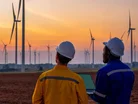
Allianz Trade is deploying AI and data analytics tools to integrate environmental and social risk assessment into trade credit insurance.
The company has published its Sustainability Handbook 2025, detailing how digital platforms and machine learning models are being used to evaluate climate exposures and ESG factors across global supply chains.
The insurer is using technology developed in collaboration with Allianz Trade Data Lab to detect sustainability risks and accelerate underwriting decisions.
AI-powered systems are also being applied to credit risk assessment, enabling the company to process ESG data at scale while supporting clients navigating regulatory requirements tied to climate transition.

AI tools for ESG analytics
Allianz Trade has integrated AI into its sustainability analytics through partnerships with internal data science teams.
The company says AI is being used to improve the detection and analysis of ESG-related risks, enabling faster and more accurate identification of vulnerabilities across companies and sectors.
One application is the ReLoC model, which uses large language models and external data to classify companies based on their involvement in low-carbon technologies.
This tool supports underwriting, product innovation and regulatory reporting while improving the scalability and reliability of sustainability data.
“In 2025, we strengthened the design of our sustainability-related insights and tools,” says Florence Lecoutre, Group Board Member in charge of Sustainability, Data Analytics & AI, Human Resources, Compliance and Communications at Allianz Trade.
“For instance, we equipped our analysts with enhanced sector outlooks and practical tools for more forward-looking, regulation-aware assessment of transition and physical risks.
“This helps us provide clearer perspectives to clients and better integrate sustainability considerations into our commercial and risk activities.
“We are accelerating the integration of sustainability into every dimension of our business.
“Our ambition is clear: to lead with responsibility, empower our clients through change and contribute to a more resilient and equitable global economy.”
The company also works with organisations such as ECOFACT to enhance ESG integration in credit assessments, providing sector-specific regulatory insights that help anticipate transition risks.
Digital platforms for climate risk
Allianz Trade has developed digital tools to help businesses assess climate risks and build resilience.
The company works with partners like Allianz Risk Consultancy to develop platforms such as CAReS, which helps businesses assess climate risks and build operational resilience.
The insurer integrates ESG considerations into underwriting, investment decisions and credit risk assessments, ensuring that environmental and social risks are systematically evaluated using data-driven methods.
Its Sustainable Solutions framework includes technology-enabled initiatives like Social2Social, which channels capital into projects that deliver measurable social impact such as affordable housing and essential infrastructure.
“Sustainability is not just an ambition: It is a responsibility,” says Aylin Somersan Coqui, Chief Executive Officer at Allianz Trade.
“Sustainability has steadily become part of how we operate and how we support our clients and partners.”
Allianz Trade has received a Gold Medal from EcoVadis, placing the company among the top 5% assessed in 2025.
The company has a score of 81 out of 100, ranking it in the top 2% globally.
Data analytics in supply chains
According to its 2025 Global Survey of 4,500 companies, ESG factors are increasingly treated as critical alongside cost and efficiency, with 81% of companies stating ESG is the most important factor when choosing suppliers or production locations.
The survey findings show how data analytics is informing procurement decisions across industries.
Allianz Trade uses risk analysis tools across operations and supply chains, applying indicators such as labour rights and ESG scores to identify vulnerabilities.
The company requires suppliers to adhere to the Allianz Vendor Code of Conduct and conducts due diligence aligned with regulations such as the German Supply Chain Due Diligence Act.
- The German Supply Chain Due Diligence Act in force since January 1 2023, mandates that large companies operating in Germany identify, prevent or minimise human rights and environmental violations within their supply chains.
- It applies to companies with at least 1,000 employees, imposing strict risk management, complaints procedures and reporting obligations, with fines up to €8m (US$9.4m) or 2% of annual turnover, according to Norton Rose Fulbright.
"From export growth, sustainability transition and supply chain resilience to investment priorities and AI adoption, the survey helped us design solutions that address companies' most urgent needs," the report says.
The data gathered through these surveys is being used to develop technology-enabled risk products.
“The idea behind this plan is to turn our colleagues into sustainability ambassadors so that, ultimately, we can spread a more sustainable mindset across the entire trade finance ecosystem,” says Piril Kadibesegil Yasar, Head of Sustainability at Allianz Trade.
“We train and empower our people to integrate sustainable thinking into all business areas, thereby creating a ripple effect that reaches our clients, brokers and partners.
“We are convinced that this is the best way to drive meaningful change within the industry.”
Technology-enabled green finance products
Allianz Trade supports energy transition projects through technology-enabled solutions such as Green2Green, which provides insurance and guarantees for low-carbon technologies including renewable energy, biofuels and electric transportation.
According to Piril, 98 policies have been issued across 16 countries and three continents since the launch of the offering.
“From biogas plants and solar parks to energy highways and decarbonisation projects, we cover a wide range of sectors and initiatives at global scale," she says.
“And with the recent launch of Social2Social Specialty Credit, we are now going beyond climate goals to include social responsibility in our sustainability commitments.”
Projects like the NeXtWind wind energy expansion in Germany and renewable developments by ONDE S.A. in Poland demonstrate how digital platforms and data analytics are being used to accelerate clean energy infrastructure financing.
These initiatives also reinvest premiums into certified green bonds, creating a circular model that reinforces sustainable energy investment.
The company has achieved a 65% reduction in emissions per employee compared to its 2019 baseline.
Its operational strategy includes 100% renewable electricity usage, electrification of its vehicle fleet and energy-efficient building management systems across offices.
Forward-looking risk assessment technology
"This helps us provide clearer perspectives to clients and better integrate sustainability considerations into our commercial and risk activities," Florence says.
"We are accelerating the integration of sustainability into every dimension of our business."
Florence adds that the company's ambition is to lead with responsibility, empower clients through change and contribute to a more resilient and equitable global economy.
The insurer is using machine learning to process forward-looking data and regulatory intelligence, allowing analysts to assess transition and physical risks with greater accuracy.
As part of the Allianz Group, Allianz Trade is aligning its activities with net zero ambitions while using technology to support businesses navigating complex environmental and social challenges.
The company is integrating digital tools across value chains to embed sustainability into governance, products and day-to-day operations.
The company aligns with global frameworks such as the UN Sustainable Development Goals and the net zero target for 2050.
Partnerships with technology providers and data science teams enable the insurer to scale ESG assessment capabilities across its global portfolio.
Company portals

Executives

Aylin Somersan Coqui
ALLIANZ TRADE Group Chief Executive Officer

Florence Lecoutre
Group Board Member in charge of Sustainability, Data Analytics & AI, Human Resources, Compliance and Communications

Piril Kadibesegil Yasar
Head of Sustainability